Trang chủ » News » OEM textile production method in Vietnam
OEM textile production method in Vietnam
1. What is the OEM textile production method?
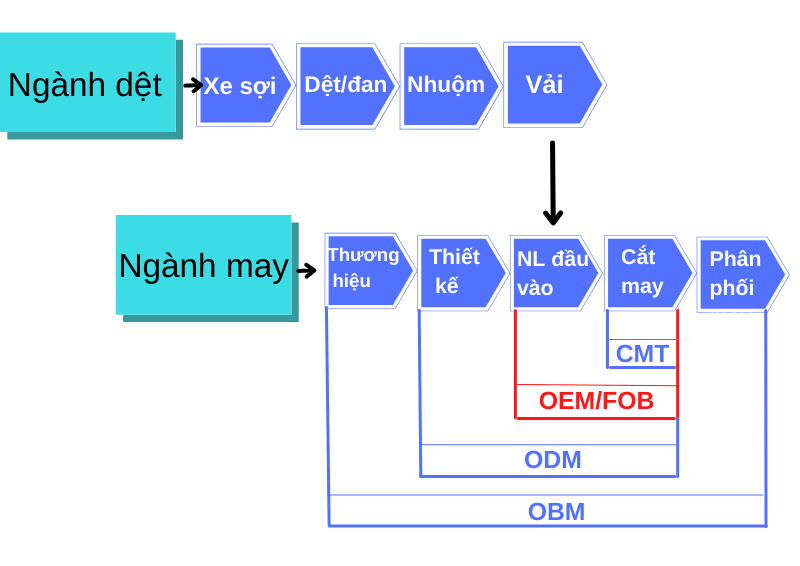
OEM (Original Equipment Manufacturer) is a textile production method, including all stages of purchasing raw materials and cutting and sewing products. With this textile production method, garment factories will fully prepare raw materials, carry out the processing, product assembly, and complete orders according to the requirements of the orderer.
OEM/FOB textile production method
2. What is the FOB textile production method?
FOB (Free One Board) means that after the order has been completed, the garment factory will contact and bring the product to the wharf.
This will be the final place to collect the goods. However, costs such as transportation and other costs incurred will be borne by the customer ordering the garment.
3. Characteristics of the OEM textile production method
Textile products, if made according to the OEM model, will have some of the following characteristics:
The products produced must meet the correct design. The quality of the fabric as well as the product must be completed according to the items committed in the contract.
Some other requirements regarding images, or the use of technological machinery must be complied with according to the agreement of both parties.
Confidentiality of product technology.
Therefore, the processing factories that accept OEM contracts must fulfill the above requirements to create prestige for the business.
4. Some notes when using the OEM textile production method
Choose a reputable garment factory: Choose a reputable textile factory when ordering according to the OEM method. Because this is a method that costs a lot of money. So carefully choose your partner to create the best quality products.
Clear contract: We need to include in the contract terms related to raw material sources, designs, and processing clearly. So that after completing the product, if it does not meet the requirements, we will use the contract to resolve it.
Registering patents and intellectual property: This will help you protect against unauthorized use of those ownership rights.